
Most bad comedy suffers from one simple flaw. The story takes too long to get to the point.

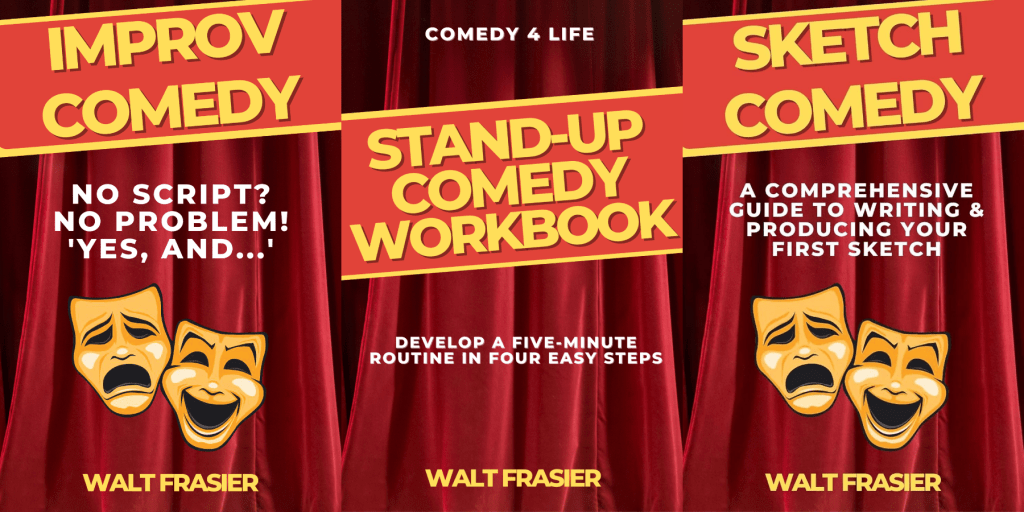
Every book in the COMEDY 4 LIFE SERIES is available FREE via Kindle Unlimited and inexpensive via Amazon Kindle. MOST also have paperback and audible editions $5-15 each HERE
- Sketch Comedy: A Comprehensive Guide to Writing & Producing Your First Sketch
- Stand-Up Comedy Workbook: Develop a Five Minute Routine in Four Easy Steps
When new writers sit down to work on a stand-up bit or a sketch, they feel the urge to explain everything. They share every single detail of the morning, the weather, and what they had for breakfast before getting to the actual joke.
In comedy, words are currency. Every extra word in your setup that does not build tension or provide essential context actually steals power from your punchline.
1. The Setup: Painting the Target
The job of a setup is simple: establish expectations.
You are giving the audience the minimal amount of information they need to understand the scene. You need a clear Who, What, and Where.
If you are talking about an argument at the grocery store, you do not need five minutes about parking your car. Get your character into the cereal aisle in two sentences. Establish the baseline reality quickly so the audience knows exactly where they are standing.
2. The Punchline: Shattering the Pattern
The punchline is the surprise. It is the unexpected twist that shatters the expectation you just created in the setup.
The punchline must always land harder and faster than the setup.
- The Setup: Leads the brain down Path A.
- The Punchline: Yanks the audience hard onto Path B.
The wider the gap between what they expected and what actually happened, the bigger the laugh.
3. Cut the Fat Without Mercy
Once you have your initial premise written down, grab a red pen. Look at your setup line by line and ask yourself:
- Does the audience need this specific fact to understand the punchline?
- Can I replace these three descriptive words with one punchier verb?
- Is my punchline positioned at the very end of the sentence?
Always place the funniest word—the “trigger word”—at the absolute end of the sentence. If you keep talking after the punchline, you step on your own laugh. Deliver the hit, shut up, and let the room react.
The Bottom Line
Great writing is not about showing how many words you know. It is about how quickly you can create an image, pull the rug out, and get out of the way. Clear out the clutter, sharpen the twist, and let the punchline do the heavy lifting.

I love teaching improv to groups, whether helping corporate teams and leaders, college kids, or k12 students, or my public classes in Times Square NYC. We say we teach improv, BUT we really teach self confidence, self awareness, listening, focus, creativity, critical thinking, etc. YES AND… Improv goes WAY beyond SEL, Psychological Safety. We become human skills ninjas that listen with our eyes a d speak with authority. Conquer stage fright and social anxiety. – Walt Frasier

- QUICK LINKS
- TIMES SQUARE IMPROV COMEDY SHOWS
- ADULT DROP IN CLASSES
- YOUTH CLASSES & COMEDY CAMP
- EMAIL for questions, comments, concerns regarding private and public programs. I daily work with corporate teams and student groups from around the world!
You must be logged in to post a comment.