
Ask any teacher what happens at 1:30 PM on a Tuesday, and they will describe the same scene.
Heads are resting on desks. Half the class is daydreaming. The other half is restless, tapping pencils, and checking the clock.

When classroom energy flatlines, piling on more verbal instruction rarely works. Yelling for attention does not work either. The brain is saturated, and attention is gone.
The instinct is often to enforce silence. In performance and active pedagogy, we take the opposite approach: you reset focus through structured physical movement.
A 5-minute brain break is not recess, and it is not unstructured chaos. It is a quick, high-intensity improv mechanic designed to wake up the nervous system, sharpen active listening, and get students laser-focused for the next academic block.

Here is how to run brain breaks that actually restore classroom control:
Our Three Guiding Principles
Every classroom game must be anchored in three foundational rules to maintain discipline and psychological safety:
- HAVE FUN (Never at Another’s Expense): The game is an ensemble effort. Humor and play should bring the room together, never single out or embarrass a student.
- YES, AND… (Accept and Support): Accept the energy in the room and direct it into the game. Support your peers by keeping the physical rhythm going without dropping the ball.
- LISTENING (#1 Skill in Comedy, School, and Life): Real focus means listening with your eyes and body. You cannot keep up with a movement game if your mind is drifting.
Two 3-Minute Brain Break Games That Restore Focus
You do not need to move desks or prepare props. These exercises can be run immediately with students standing right beside their chairs:
1. Pass the Clap (Rhythm & Eye Contact)
- How It Works: Have the class stand in a circle (or follow an assigned desk order). Student A turns to Student B, makes direct eye contact, and both clap their hands together simultaneously. Student B immediately turns to Student C, makes eye contact, and claps simultaneously.
- The Goal: Pass the synchronized clap around the entire room as fast as possible without breaking the chain.
- Why It Works: It demands 100% presence. If a student checks out or looks away, the rhythm breaks. It forces everyone to watch, wait, and lock in physically.
2. Red Ball, Green Ball (Split-Brain Focus)
- How It Works: Hold up an imaginary “Red Ball.” Explain that it is heavy. Look across the room, say a student’s name, and pantomime tossing the heavy ball to them. They must “catch” it with equal weight and toss it to someone else.
- The Escalation: Once the Red Ball is in motion, introduce an imaginary “Green Ball” that is light as a feather. Both imaginary objects are now being passed across the room at the same time.
- Why It Works: It forces students to juggle spatial awareness, vocal cues, and physical control simultaneously. It clears out mental fatigue and replaces it with sharp, active concentration.
The 30-Second Debrief
The brain break ends the moment the exercise stops.
Take thirty seconds to transition the physical focus back to the desk:
- “Take a deep breath in, hold it, and let it out.”
- “Notice how quiet and alert the room is right now.”
- “Bring that exact same focus to page 42.”
Movement breaks do not waste instructional time. They buy back the next forty minutes of deep, uninterrupted learning.
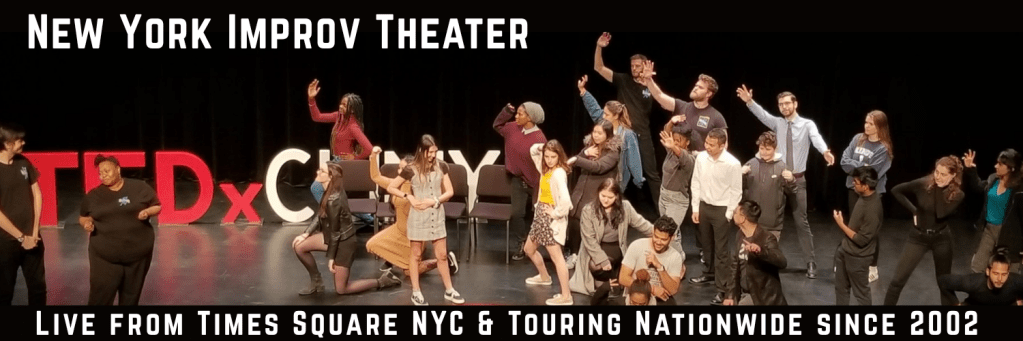
LOOKING FOR MORE IMPROVISATION IN THE CLASSROOM? NYC DOE VENDORS

We offee interactive educational assemblies, student workshops, or teacher professional development to your school? Reach out to us today to explore custom programs tailored to your students and faculty! Askabout our field trips too!


You must be logged in to post a comment.