
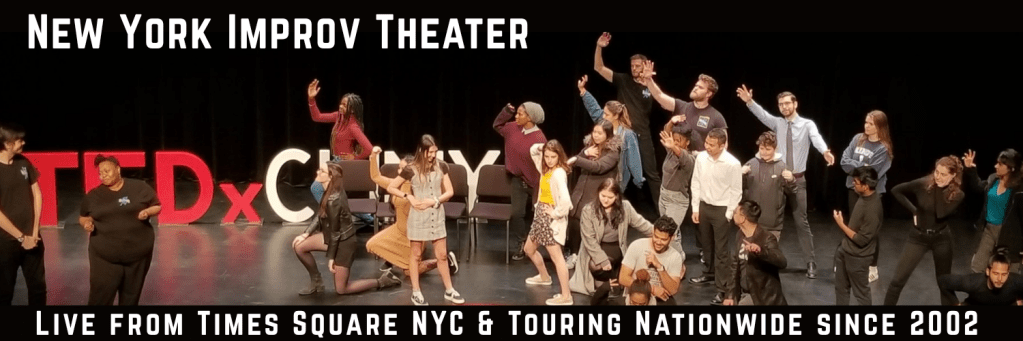
At New York Improv Theater, I get to witness something truly special: the transformative power of improv. We work with hundreds of corporate teams and schools every year, and the vast majority of these experiences are incredibly rewarding. I see firsthand how improv builds essential skills, fosters collaboration, and unlocks creativity.

Almost daily, I’m reminded of improv’s profound impact on both professionals and students. Yet, every so often, I encounter situations that give me pause. While my instinct is always to be supportive, I’ve learned that sometimes the most helpful thing is to gently point out inconsistencies.
You see, in improv, we have a saying: “Yes, and…” It’s about building on each other’s ideas, about collaboration, and about creating something together. But what happens when the very people who are supposed to be leading and guiding others – be it in a corporate boardroom or a school auditorium – aren’t embodying this principle?
I’ve been in workshops where leaders are physically present but mentally checked out, talking amongst themselves while their team members are trying something new. I’ve witnessed teachers chatting during a school assembly, only to later reprimand students for the same behavior.

In those moments, a gentle reminder often becomes necessary: “You know how frustrating it is when your team or students talk while you’re talking? Let’s lead by example.”
Early in my career, when I primarily worked with corporate teams, I frequently heard the same feedback: “We love this, but it’s our managers…” It became clear that no amount of team-building exercises can truly fix underlying leadership issues. If morale is suffering due to ineffective management, an improv session is a band-aid, not a cure.
A particularly telling experience was with a public health department who warned us that a significant portion of their staff felt demoralized by management. My immediate thought was, “We need to address leadership first.” Company culture starts at the top. You can’t improv your way out of a toxic work environment.

The same principle applies to schools. It’s disheartening when teachers are hesitant to participate in workshops or engage during assemblies, only to then correct students for the very same behaviors. How can we expect our children to be engaged and enthusiastic learners if their role models are not?
The bottom line is this: our youth and our professional teams learn from what they see. We are all, in some way, role models. Our actions, not just our words, shape the behavior of those around us. If we aspire to nurture exceptional individuals and high-performing teams, the onus is on all of us to lead by example. That means:
- Participating fully: Whether it’s an improv exercise or a staff meeting, show up, be present, and engage.
- Listening actively: Give your full attention to others, whether they’re your employees, your students, or your colleagues.
- Being open to new ideas: Embrace the “Yes, and…” philosophy. Be willing to build on the ideas of others and create a collaborative environment.
- Holding ourselves accountable: If we expect certain behaviors from others, we must model those behaviors ourselves.
Improv teaches us many valuable lessons about communication, collaboration, and creativity. But perhaps the most important lesson is this: the best way to lead is by example. Let’s all strive to be the kind of role models our teams and our children deserve.



You must be logged in to post a comment.